ของพรีเมียมบริษัทที่ใช้จริง: Procurement Guide
- Corporate Premium
- Marketing Procurement
- Practical Giveaway
- Custom Herbal Inhaler
- Employee Gift
Key takeaways
- A corporate premium is more likely to remain in use when it offers clear utility, low carrying friction, appropriate design, readable instructions, and a genuine fit with the recipient’s routine.
- The confirmed herbal-inhaler option is 5 grams with a 12.3 × 3 cm wrap-label area, a 3.5 × 3.5 cm lid-artwork area, a 100-piece starting MOQ, and a confirmed price of THB 35 per piece.
- The 12.3 × 3 cm and 3.5 × 3.5 cm figures are artwork areas—not external jar dimensions—so procurement should request a sample when gift-box or kit fit must be exact.
- Marketing should own the recipient, message, brand hierarchy, and intended action, while Procurement locks the product, quantity, quotation scope, approval version, QC, packing, and delivery evidence.
- Brand exposure should be measured with distribution counts, opt-in QR activity, recipient feedback, and observed reuse indicators rather than assuming every distributed item is kept or used daily.
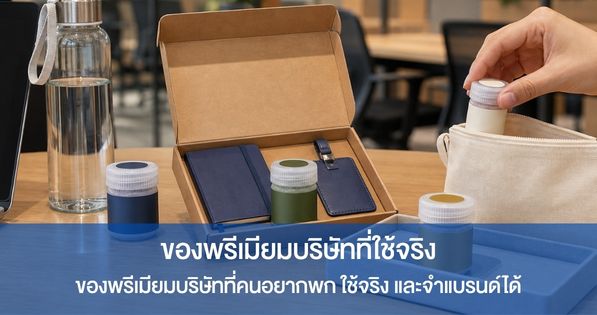
ของพรีเมียมบริษัท creates better everyday brand value when it is genuinely useful, easy to carry, appropriate for the recipient, and branded with enough restraint that people are comfortable keeping it on a desk or in a bag. A compact custom-label herbal inhaler is one practical option: the confirmed specification is 5 grams, starts at 100 pieces at THB 35 per piece, and provides both a wrap-label area and a lid-artwork area for the organization’s identity.
No premium can guarantee that every recipient will keep or use it. The goal is to reduce discard risk through utility, portability, recipient fit, clear information, and thoughtful distribution.
What makes ของพรีเมียมบริษัท more likely to be used?
Marketing teams often begin with visibility: logo size, campaign colors, and the number of impressions. Procurement teams often begin with unit price, lead time, and delivery. A successful premium needs both perspectives, plus the recipient’s real routine.
Use seven tests before approval:
- Utility: the recipient understands the function without a long demonstration; directions and cautions remain readable and copy avoids unsupported medical claims.
- Portability: the item fits the intended bag, desk drawer, welcome kit, or event tote. When exact fit matters, measure a sample rather than estimating from the label template.
- Recipient fit: role, work setting, travel habits, gift policy, and scent sensitivity support the choice; fragrance-sensitive recipients can decline it politely.
- Design comfort: the logo is clear but not so dominant that the object feels uncomfortable to carry outside work.
- Quality: closure, cleanliness, label alignment, lid artwork, and variant sorting meet the approved reference.
- Distribution: the item has a meaningful moment—onboarding, registration, customer visit, employee activity, partner appreciation, or annual meeting.
- After-use: contact, optional QR information, storage guidance, and packaging are appropriate without adding unnecessary material only to make the gift look larger.
Why consider a custom herbal inhaler?
A compact herbal inhaler can fit employee, customer, partner, and event programs because it is small, recognizable in Thailand, and easy to combine with other kit items. The wrap label carries the visual system while the lid provides a second branding surface.
Mor Boonruang Thai Traditional Medicine’s local herbal community enterprise produces handmade herbal goods, connecting the project with local work and Thai herbal knowledge. Describe this relationship accurately; do not add unverified certification or impact totals.
Scent-sensitive recipients may decline it, gift policies may limit branded items, and international distribution may require review. Procurement should check destination, product information, and recipient policy.
What are the confirmed specifications and price?
- Product: Thai herbal inhaler jar
- Net content: 5 grams
- Starting MOQ: 100 pieces for the confirmed specification
- Confirmed unit price: THB 35 per piece
- Wrap-label artwork area: 12.3 × 3 cm
- Lid-artwork area: 3.5 × 3.5 cm
- Customization: approved corporate logo and artwork
The centimeter measurements are artwork areas, not the jar’s external diameter and height. A wrap label may include overlap, safe margin, or an unprinted seam. Request the current production template and a physical sample when designing a fitted gift box, tray, sleeve, pouch, or multi-item welcome kit.
The written quotation should confirm whether THB 35 per piece includes design support, label printing, label application, lid sticker, seal, individual wrap, card, packing, tax, and delivery. Additional scents, artwork versions, inserts, boxes, multiple shipping addresses, or timed receiving appointments can change the total project cost.
How should Marketing brief the premium?
Marketing should define the recipient and brand reason before Design starts. Include:
- Recipient group, routine, and relevant restrictions
- Objective: welcome, appreciation, event support, PR, or relationship building
- Distribution moment and staff explanation
- Brand hierarchy and tone
- One short recipient-centered message
- Preferred scent and reason
- Optional QR action, page owner, and required languages
- Prohibited copy or logo uses
Define what the recipient should notice first and how the item should feel in daily use. For several departments, use one base layout and change only approved identifiers.
The DIY configurator can help structure an early visual direction before the formal production proof.
What should Procurement lock in writing?
Procurement converts the idea into a controlled scope. The quotation request should identify:
- Product reference, net content, MOQ, and unit-price basis
- Quantity by scent, artwork, recipient, and destination
- Scent reference plus body-label and lid templates
- Design concepts, revisions, printing, application, seal, and packing
- Box, insert, card, sleeve, or assembly
- QC checks and evidence
- Production start, completion estimate, shipping, and receiving window
- Tax, payment, quotation validity, and exclusions
Compare the complete delivered scope, because excluded packing, sorting, delivery, proofing, or replacement can outweigh a lower unit price.
How should the label communicate the brand every day?
The 12.3 × 3 cm wrap-label area should be treated as a sequence around a curved object:
- Front panel: logo or campaign symbol plus a short recipient message
- Side panel: product or scent name and approved supporting content
- Information panel: directions, cautions, responsible contact, and other required information
- Seam zone: keep important words, faces, QR codes, and small logos away from overlap or gap
The 3.5 × 3.5 cm lid-artwork area can carry a simplified logo, color code, appreciation symbol, or short campaign cue. Confirm final cut shape, orientation, edge clearance, and seal position using the producer’s template. Do not assume that a 3.5 × 3.5 cm artwork file means the external lid is a 3.5 cm square.
Brand recall does not require repeating the full company name on every surface. A consistent color, symbol, message tone, and lid cue can communicate ownership without making the object uncomfortable to carry. Print the proof at actual size and view it from normal handling distance.
Which corporate programs fit this premium?
- Onboarding: add a short welcome message and place the sealed inhaler in a compact employee kit.
- Meetings and seminars: distribute through controlled registration or participant kits; separate speaker, staff, late-registration, and replacement stock.
- Customer appreciation: use restrained branding and issue visit stock by sales representative so leftovers can be reconciled.
- PR and roadshows: match the key visual and test any optional QR on the curved finished label using documented UTM parameters.
- CSR and community storytelling: describe the real Mor Boonruang community-production relationship and agree in advance on evidence for any impact reporting; never invent social-impact totals.
How should scent be selected?
Approve the current tester, not the name alone. Available directions previously identified include Peony & Rose, Yuzu & Clove, Rosemary & Kaffir Lime, Eucalyptus & Peppermint, and Lavender & Vanilla, subject to current availability and compatibility. These are scent descriptions, not treatment claims. For multiple scents, define whether recipients choose or receive preset sealed units, and confirm whether the MOQ applies to the total or separately per scent, artwork, product, or container.
What should QC and receiving check?
The approved control set should contain the product reference, scent reference, actual-size body label, lid artwork, seal, packing specification, quantity, and destination matrix. QC should verify:
- Correct product–scent–artwork match
- Container closure and clean exterior
- Body-label direction, seam, adhesion, and readability
- Lid-artwork orientation, crop, edge clearance, and adhesion
- QR scan from the finished piece if used
- Seal or individual-wrap position
- Quantity by variant, carton, and destination
- Carton mark, receiving contact, and required documents
Compare the first completed unit of every variant with the approved reference before continuing. At final packing, reconcile completed, rejected, replacement, reserve, and shipped quantities. The receiving team should count cartons and inspect representative sealed units from every version before internal distribution.
How can the company evaluate whether people use it?
Track three separate counts: produced, delivered to distribution points, and actually distributed. Add program-appropriate evidence:
- Voluntary post-event or employee feedback
- Requests for an additional piece or replacement
- Observed items remaining in kits or returned unopened
- Opt-in QR scans, unique landing-page visits, and completed actions
- Sales-team or event-staff distribution notes
- Leftover and reserve reconciliation
No metric alone proves daily use. Read them together, state the observation period, protect personal data, and avoid individual tracking without a clear purpose and notice. Learn which recipient, design, scent, and distribution context creates the strongest fit.
What is the recommended ordering workflow?
- Define the recipient, objective, budget, distribution moment, and required arrival date.
- Request the 5-gram sample and current scent tester; confirm MOQ 100, the THB 35 price basis, and quotation inclusions.
- Send logo, exact copy, colors, artwork count, packing, and destinations.
- Approve the 12.3 × 3 cm body label and 3.5 × 3.5 cm lid artwork at actual size, then lock one version and approver.
- Confirm payment, production window, QC evidence, packing list, and delivery plan.
- Produce, inspect, reconcile, pack by destination, dispatch, receive, and sample-check every version.
- Control distribution, record leftovers, and review feedback before the next order.
Ready to request a corporate quotation?
Prepare the organization name, recipient group, program date, required arrival date, quantity, delivery points, product and scent preference, logo, exact copy, number of artworks, QR destination if any, seal and packaging needs, invoice details, and final approver. Request a physical sample if the item must fit an exact gift-box compartment because external jar dimensions remain unconfirmed here.
For product development, formulation, and private-label support, review OEM services. To confirm current scope, scent options, production queue, and a quotation for ของพรีเมียมบริษัท, contact Mor Boonruang at LINE: @boonrueng or send the brief through contact.
Frequently asked questions
- What makes a corporate premium more likely to be kept and used?
- Choose an item with clear utility, low carrying friction, recipient fit, restrained branding, readable information, reliable quality, and a meaningful distribution moment. No product can guarantee reuse, so measure feedback and distribution evidence rather than assuming it.
- What are the confirmed specifications and price for the herbal inhaler premium?
- The confirmed option is a 5-gram herbal inhaler jar with a 12.3 × 3 cm wrap-label area and a 3.5 × 3.5 cm lid-artwork area. The starting MOQ is 100 pieces at THB 35 each; quotation inclusions and external dimensions should be confirmed separately.
- What should Marketing and Procurement each approve?
- Marketing should approve the recipient, objective, message, brand hierarchy, scent direction, and action. Procurement should lock the product, quantity, quotation scope, artwork version, QC, packing, payment, and delivery evidence in writing.