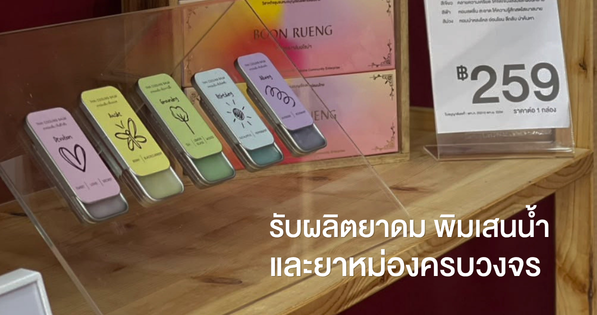
รับผลิตยาดม พิมเสนน้ำ และยาหม่องครบวงจร
- Herbal Product OEM
- Liquid Balm OEM
- Balm Manufacturer
- Full Service OEM
- Community Enterprise
Key takeaways
- Full-service production should define product selection, samples, scent or formula route, design, packaging, production, inspection, and delivery responsibilities in writing.
- Herbal inhalers, liquid-balm inhalers, and balms serve different recipients, channels, packaging needs, and brand stories.
- An available product direction can accelerate market testing, while custom development is more suitable when the audience and sensory objective are clearly defined.
- Community-made value is strongest when suitable paid tasks, approved references, work instructions, batch counts, and checkpoints are clearly defined.
- For end-to-end product and production planning, contact Mor Boonruang at LINE: @boonrueng.
รับผลิตยาดม พิมเสนน้ำ และยาหม่องครบวงจร means coordinating product selection, scent or formula direction, label design, packaging, production, inspection, and delivery planning through one structured project. Mor Boonruang and 248 STRIDE work with Mor Boonruang Local Herbal Thai Traditional Medicine Community Enterprise to connect Thai herbal knowledge with suitable paid community work.
“Full service” should not be a vague promise. A reliable project defines what is included, who approves each stage, what requires separate development or fees, and which reference controls production. This guide explains the decisions a new brand, shop, organization, or event team should make before requesting a quotation.
What does รับผลิตยาดม พิมเสนน้ำ และยาหม่องครบวงจร include?
Depending on the confirmed scope, an end-to-end project may include:
- Choosing the product format
- Selecting an available scent or formula direction
- Evaluating samples or product references
- Preparing a product and brand brief
- Label layout and production artwork
- Container and packaging selection
- Logo, color, text, and QR code placement
- Material and production planning
- Suitable paid work through the community enterprise
- Labeling, assembly, counting, and packing
- Visual inspection and quantity reconciliation
- Delivery planning
Ask for a written scope. Confirm the product, quantity, sample route, design concepts, revision rounds, packaging, delivery addresses, payment terms, and final approver. Full service does not automatically mean unlimited revisions, every package option, trademark work, photography, illustration, or all regulatory services are included.
Which product should a brand choose?
Thai herbal inhaler
A herbal inhaler emphasizes recognizable herb character, local knowledge, and a familiar everyday format. It can suit Thai-themed brands, tourism gifts, cultural events, community products, wellness shops, and practical giveaways.
Key decisions include herb presentation, aroma, container, closure, label area, packaging, and intended sales or giveaway channel. The story can feel traditional, natural, craft-oriented, premium, or modern Thai.
Liquid-balm inhaler
A liquid-balm inhaler is compact, colorful, and scent-led. It can suit lifestyle brands, fan projects, wedding favors, corporate gifts, hotels, cafés, and events.
Key decisions include scent direction, container color, label material, individual wrap, card, pouch, or box. The sensory experience and visual design often carry equal importance.
Balm
Balm is a topical format that can fit wellness sets, massage businesses, sport-oriented gifts, travel kits, spas, and personal-care brands. Important decisions include texture, scent, container size, label surface, directions, cautions, and storage.
Public wording must match the actual product and applicable requirements. Avoid claims that the balm treats, prevents, or cures disease unless they have been properly reviewed and are legally supportable.
How should a buyer choose among the three formats?
Start with the recipient and channel:
- Choose herbal inhaler for a direct Thai-herbal story and familiar use.
- Choose liquid balm for a contemporary scent-and-color experience.
- Choose balm for a portable topical product within a wellness range.
Then compare:
- Target customer
- Intended use and sales channel
- Available product or scent references
- Container and label area
- Packaging and transport needs
- Minimum quantity for the specification
- Complete delivered cost
- Storage requirements
- Retail price or giveaway budget
- Reorder and product-line potential
Launching all three at once can spread the budget across multiple labels, containers, samples, and sub-batches. A new brand often learns faster from one hero product or a focused pair.
What information is needed for formulation and scent support?
Not every project requires a new formula. An available product or scent direction may be the fastest route when the brand wants to test packaging, market response, and sales channels. A custom direction may be useful when the brand has a defined customer, sensory objective, and development budget.
A useful brief includes:
- Product format
- Target customer
- Desired sensory mood
- Two or three scent references
- Notes or characteristics to emphasize or avoid
- Preferred intensity
- Intended use and channel
- Sample and approval expectations
- Public wording for the product
- Delivery target
Use sensory descriptions such as fresh, cool, citrus-like, herbal, floral, soft, or warm. Do not assume that a list of ingredients automatically becomes a feasible or compliant product direction.
Confirm what each sample represents and how many review rounds are included. If the brief changes after sample approval, another review may be necessary.
How does label and packaging design work?
The label should identify the brand and product, remain readable on the actual container, and include information appropriate to the product category and channel. A beautiful enlarged preview can fail when printed small.
Send:
- Brand and product names
- Approved logo file
- Brand colors
- Exact Thai and English text
- Product or scent name
- QR destination
- Container template if confirmed
- Packaging concept
- Target customer
- Visual references
- Delivery date
- One final approver
Confirm the number of concepts, revisions, language versions, production files, and exclusions. Full brand strategy, logo creation, illustration, photography, packaging structure, or unlimited revisions may require a separate scope.
Before written approval, check every name, date, spelling, logo, color, QR code, directions, cautions, orientation, and cut-safe area at actual size.
The DIY configurator can help organize the initial color and visual direction.
What should appear on the label?
The exact checklist depends on product category, claims, market, and sales channel, so confirm applicable requirements before printing. The label may need:
- Brand and product names
- Product-format description
- Scent or variant name
- Net content or pack information where applicable
- Directions for responsible use
- Cautions and storage information where applicable
- Producer or distributor information
- Contact channel
- Batch, date, or traceability information as required
- QR code to verified product information
Do not crowd the label with a long brand or community story. Move extended content to a mobile-friendly QR page. Avoid unsupported medical claims; product communication should remain accurate and appropriate.
How does community production work?
Mor Boonruang works with Mor Boonruang Local Herbal Thai Traditional Medicine Community Enterprise. Suitable paid tasks may include preparation, wrapping, label application, set assembly, counting, visual checks, and packing.
Approved references, instructions, clean work areas, batch quantities, and checkpoints help handmade stages stay consistent. Product-sensitive stages still follow the approved method and responsible controls. Do not claim every stage is handmade if equipment or controlled processing is used.
A QR page can explain the enterprise, local paid tasks, and Thai-herbal connection. Retaining approved files, references, packing instructions, batch records, and feedback helps the community repeat and improve future orders.
What determines minimum quantity, price, and timeline?
These three factors are connected. Important drivers include:
- Product format and container
- Available direction versus custom development
- Total quantity
- Number of scents or variants
- Number of label and language versions
- Artwork condition
- Standard versus premium packaging
- Personalized names or variable data
- Multiple delivery addresses
- Urgent or fixed-date requirements
Ask for the current minimum for each confirmed specification. A combined total across several products does not automatically satisfy every product’s minimum.
Compare quotations on the same complete scope. A low headline price may exclude samples, design, packaging, packing, delivery, or revisions included elsewhere. Larger quantities may reduce unit price when setup work is shared and the specification stays stable, but added variants can increase work.
The schedule begins when the required commercial and approval steps are complete—not merely when the first inquiry is sent. Confirm what reserves production capacity and when the product, scent, artwork, and packaging must be locked.
From idea to delivery: the end-to-end process
- Choose herbal inhaler, liquid balm, or balm and define whether it will be sold, given away, or included in a set.
- Confirm customer, channel, working quantity, delivery location, and fixed launch or event date.
- Compare references or samples and decide between an available direction and custom development.
- Submit logo, colors, exact copy, QR destination, packaging idea, references, and final approver.
- Confirm samples, formulation route, design, revisions, labels, packaging, community work, delivery, payment, and approvals in writing.
- Document what each sample and proof controls; approve actual-size artwork and every Thai and English character.
- Prepare materials, approved references, instructions, batch quantities, and checkpoints.
- Produce, label, assemble, inspect, and separate questionable pieces.
- Pack cartons by product, variant, set, recipient group, or destination.
- Receive with a packing list and compare finished pieces with approved references.
For a broader view of available support, review OEM services.
Final project checklist
Before production, confirm:
- Product format and approved product or scent reference
- Quantity and reserve
- Container and closure
- Brand and product names
- Thai and English spelling
- Logo and color references
- Label information and actual-size readability
- QR destination
- Design deliverables and revisions
- Packaging and packing groups
- Current minimum and quotation assumptions
- Delivery date and addresses
- One final approver
- Written proof and approved changes
After production, open one piece from each variant and compare it with the approved references. Store products away from excessive heat, direct sunlight, moisture, and strong external odors as appropriate to the format.
Is full-service herbal product production right for your project?
A full-service route is useful when the buyer wants one coordinated workflow and clear responsibilities. It is still important to understand every included and excluded task so that “complete service” becomes a practical project plan rather than a marketing phrase.
To begin a รับผลิตยาดม พิมเสนน้ำ และยาหม่องครบวงจร project, send the product preference, purpose, quantity, delivery date, sensory direction, brand assets, label text, packaging idea, and delivery locations.
Mor Boonruang and 248 STRIDE welcome projects for new brands, shops, tourism, hospitality, events, corporate gifts, and community products. For product selection, design, community production, and delivery planning, contact LINE: @boonrueng or use the contact page.
Frequently asked questions
- What is included in full-service production for herbal inhalers, liquid balm, and balms?
- The written scope may cover product selection, samples, scent or formula direction, label design, packaging, community production, inspection, packing, and delivery planning. Confirm revisions, files, minimums, and exclusions before approval.
- Should a new brand launch herbal inhalers, liquid balm, and balms at the same time?
- Not necessarily. One hero product or a focused pair is often easier to budget, test, measure, and improve before expanding into all three formats.
- How does full-service production support Mor Boonruang’s community enterprise?
- Suitable paid tasks can include preparation, wrapping, labeling, set assembly, counting, visual checks, and packing. Approved references, work instructions, batch counts, and checkpoints keep community-made stages organized.