รับผลิตยาดม: Signature Products for Shops
- Custom Herbal Inhalers
- Café Merchandise
- Gallery Souvenirs
- Community Products
- Low MOQ
Key takeaways
- Custom inhaler production can start from only 100 pieces, allowing cafés, coffee shops, galleries, and small retailers to test a signature souvenir with manageable stock.
- A shop inhaler should connect its scent, colors, label, story, and display format with the atmosphere customers already remember.
- Costs remain easier to control when the first project uses a standard container, focused label design, simple packaging, and a clearly defined quantity.
- Working with Mor Boonruang Thai Traditional Medicine Community supports useful Thai community products and suitable paid handmade work.
- Retailers should calculate the complete landed cost—including product, label, packaging, assembly, delivery, and payment fees—before setting the selling price.
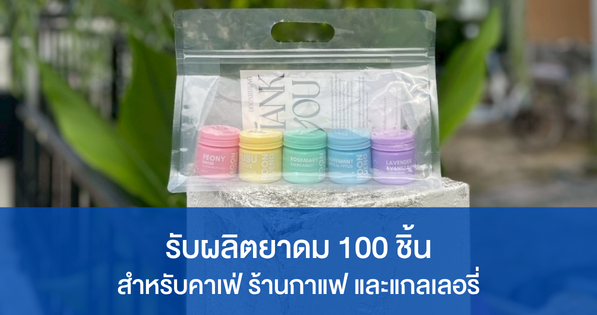
รับผลิตยาดม is a practical way for a café, coffee shop, gallery, or small retail space to create a signature souvenir without beginning with a large inventory. Starting from only 100 pieces allows the shop to test the design, customer response, display location, selling price, and repeat-order potential while supporting good community products from Mor Boonruang Thai Traditional Medicine.
A shop-branded inhaler can be more than a logo item. When its scent, colors, label, story, and packaging match the atmosphere of the place, it becomes a small product that helps customers remember where they visited and gives them something useful to carry home.
Why Is รับผลิตยาดม a Good Idea for a Shop?
A strong shop product should be easy to understand, easy to display, and easy for customers to carry. Herbal inhalers fit these requirements because they are compact, lightweight, familiar to Thai customers, and suitable for inclusion in a small souvenir area.
They can work as:
- A signature item beside the cashier
- A souvenir for tourists and visitors
- A limited seasonal product
- A gift included with a minimum purchase
- A member or loyalty-program reward
- Merchandise for an exhibition or gallery event
- A small add-on inside a coffee, tea, or wellness gift set
- A co-branded product for a local collaboration
Unlike bulky merchandise, 100 inhalers require relatively little shelf space. The shop can test them on one counter tray, one display shelf, or as part of a curated gift corner before deciding whether to increase the order.
How Can a Café Turn an Inhaler into a Signature Product?
Customers remember a café through more than coffee. They remember the color palette, music, interior materials, service, packaging, and overall mood. A signature inhaler should translate one or two of those memorable elements into a portable product.
A minimalist coffee shop may choose a clean label in black, cream, or kraft-inspired colors. A botanical café may use green tones and herb illustrations. A playful dessert shop may prefer bright colors and collectible label variations. The goal is not to copy the menu design exactly but to make the inhaler feel as if it naturally belongs in the same brand world.
The scent direction can also support the concept. A fresh, cooling, herbal, citrus-led, soft, or traditionally Thai character creates a different impression. The selected scent should remain appropriate for the intended user and must not be described with unsupported treatment claims.
Place a short story on the label, sleeve, or display card. Explain the inspiration, community connection, or reason the shop created the item. A small product becomes more memorable when the customer understands why it exists.
Why Does Starting from 100 Pieces Help Control Cost?
A 100-piece starting quantity reduces the amount of capital tied up in first-run stock. It gives the shop enough units for real sales and customer feedback without requiring a large storage area or a long commitment to one design.
Cost is easier to manage when the first project uses:
- An available product format
- A standard container
- One clear label size
- A focused color palette
- Simple outer packaging
- One approved scent direction
- A defined number of inserts or accessories
- A single delivery location
The final cost still depends on the formula, container, print material, packaging, handmade details, assembly, and delivery. “Not expensive” should therefore be evaluated through the complete quotation rather than a single unit price.
Calculate the landed cost:
Landed cost per piece = product + label + packaging + assembly + delivery + payment-related cost
Then set a selling price that leaves room for damaged units, shop promotions, taxes, and future reordering. A product that looks affordable but has uncounted packing or delivery costs can produce a misleading margin.
How Should a Gallery or Design Store Approach the Product?
A gallery customer often expects the souvenir to connect with an exhibition, artist, place, or visual idea. The inhaler can be treated as a small edition rather than generic merchandise.
Possible directions include:
- A label adapted from an approved artwork detail
- A color collection inspired by the exhibition
- Numbered or dated sleeves for a limited event
- A bilingual story card for international visitors
- A collaboration credit for the artist and community producer
- A gift set with postcards, prints, or another local product
Copyright and artwork permission must be confirmed before printing. The artist’s name, image, logo, or exhibition title should appear only according to the approved agreement.
For a permanent museum or gallery store, avoid placing a temporary event date on the main label. Use a removable sleeve or card so leftover units can continue to sell after the exhibition ends.
What Can Be Customized for the Shop?
Customization should focus on what customers can see, understand, and remember.
Scent direction
Choose a scent character that suits the shop. A café may prefer a clean, approachable profile; a gallery may choose something more distinctive; a Thai souvenir store may emphasize traditional herbal identity.
Label and colors
Use the shop’s approved logo, brand colors, typeface, and message hierarchy. Keep directions, warnings, responsible-party details, and other necessary information readable.
Container and portability
Discuss a pocket format, neck strap, keychain, or gift-box presentation. Confirm closure, durability, shelf stability, and compatibility with the chosen label.
Packaging
Options may include a label only, paper sleeve, box, card, pouch, or set with other community products. A clear display card at the point of sale may be more useful than complex packaging on every piece.
Collection structure
A shop can begin with one scent and one design, or create a small color series. For the first 100 pieces, simplicity usually makes stock and customer feedback easier to understand.
How Does the Project Support Mor Boonruang Thai Traditional Medicine Community?
Choosing a product connected with Mor Boonruang Thai Traditional Medicine supports Thai herbal knowledge and suitable community-based work. The order can create paid tasks related to packaging preparation, sticker application, gift-set assembly, counting, presentation checks, and packing.
This participation should be explained honestly. Community handwork is valuable because it is real work—not because every controlled manufacturing step is claimed to be handmade.
A clear task model separates:
- Controlled product work — formula, ingredients, batch identity, required information, and release checks
- Community handmade work — approved labeling, folding, decoration, assembly, and packing
- Final verification — quantity reconciliation, visual inspection, and dispatch approval
Retailers can share the community story on a product card, shelf sign, website, or social post. Do not publish personal images or income details without permission. The most credible message identifies the actual work performed and avoids exaggerated claims.
How Can the Shop Display and Sell the Inhaler?
Good display helps a small item avoid disappearing among larger products.
Try:
- A tray beside the payment counter
- A small tester story card without allowing unsafe product sharing
- A shelf near postcards and souvenirs
- A basket in the gift-set area
- A sign showing the community background
- A limited-edition display linked to an exhibition
- A bundle beside coffee beans, mugs, or tote bags
- A QR code leading to product and producer information
Make the price visible. Customers are more likely to add a small souvenir when they can understand the item and price without asking staff.
Train the team with a short explanation: what the product is, where it comes from, how to use it according to the label, and why the shop selected it. Staff should not make medical claims or recommend the product as a replacement for health care.
What Is the Production Process?
- Prepare the shop brief — describe the concept, customers, quantity, budget, display plan, and required date.
- Select the product direction — discuss scent, container, design, community story, and packaging level.
- Review the quotation — confirm what is included for sampling, label, box, assembly, taxes, and delivery.
- Approve a physical sample — check scent, closure, ease of use, label adhesion, and presentation.
- Prepare and review artwork — check logo, colors, Thai and English spelling, directions, warnings, and contact details.
- Approve the final specification — confirm quantity, product reference, artwork, packaging, price, and schedule in writing.
- Produce and complete handmade stages — follow the approved sample and task instructions.
- Inspect finished units — check quantity, visible condition, packing, and rejected items.
- Deliver before launch — leave time for counting, shelf setup, staff briefing, and photography.
Lead time depends on the selected product, component availability, design revisions, printing, and packaging complexity. Ask for a schedule based on the actual shop configuration.
How Can You Start a รับผลิตยาดม Project?
Businesses can review OEM services for product development, formulation coordination, labels, packaging, and brand support. For a quotation or project discussion, contact 248 STRIDE or contact Mor Boonruang directly on LINE: @boonrueng.
Starting from only 100 pieces makes it possible to test a signature souvenir without a very large first investment. A well-designed inhaler can create retail income, strengthen the shop’s identity, give customers a useful memory of the place, and support good community products from Mor Boonruang Thai Traditional Medicine.
Frequently asked questions
- Can a café or gallery start custom inhaler production with only 100 pieces?
- Yes. A 100-piece starting quantity allows cafés, coffee shops, galleries, and small retailers to test a signature souvenir with manageable stock. Confirm whether sample, display, replacement, and reserve units are included in the 100 pieces.
- How can a shop make a custom inhaler feel like a signature product?
- Connect the scent, colors, label, packaging, story, and point-of-sale display with the shop’s existing atmosphere. A clear local or community story helps customers understand why the product belongs in that café or gallery.
- How does a custom shop inhaler support Mor Boonruang Thai Traditional Medicine community?
- The order can support Thai herbal knowledge and suitable paid community tasks such as packaging preparation, labeling, gift-set assembly, counting, visual checks, and packing. Controlled product stages remain under the responsible production process.