สั่งทำยาดม for CSR: Handmade by Generation Two
- Corporate CSR
- Handmade Inhaler
- Community Enterprise
- Corporate Gift
- Thai Herbal
Key takeaways
- A credible CSR inhaler order links a real corporate need to community production, clear documentation, and responsible communication.
- Mor Boonruang’s second generation preserves inherited herbal work while improving design, coordination, and reporting for private-sector clients.
- Procurement should confirm product specifications, claims, quality criteria, consent, delivery timing, and required evidence before approval.
- Companies should separate direct outputs, short-term outcomes, and long-term impact to avoid exaggerated CSR claims.
- For corporate consultation and a quotation, contact Mor Boonruang on LINE: @boonrueng.
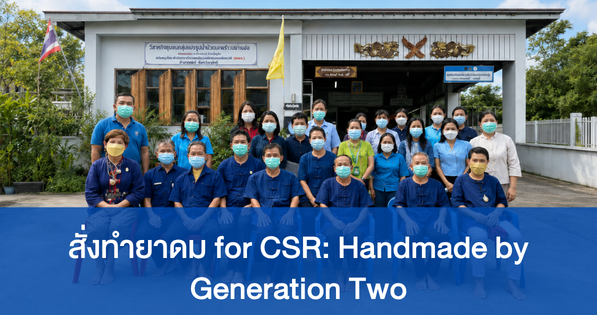
สั่งทำยาดม for a corporate CSR project can combine a useful branded gift with community-based employment when the project is planned transparently. Mor Boonruang Thai Traditional Medicine Community Enterprise is now being carried forward by its second generation, preserving hands-on herbal work while adapting design, documentation, and production coordination for private-sector clients.
The strongest CSR order is not simply a product with a social-impact message printed on it. It connects a real business need—such as employee gifts, seminar kits, customer appreciation, or a sustainability campaign—to a clear production scope, responsible communication, and evidence the procurement team can verify.
What does “second generation” mean for Mor Boonruang?
The second generation is a bridge between inherited community knowledge and the expectations of modern companies. The intention is to preserve, continue, and develop the work rather than replace its identity.
Preserving means respecting the knowledge, careful handling, and practical experience built by the Mor Boonruang Thai Traditional Medicine Community Enterprise. Continuing means creating orders that keep community skills active and create income opportunities. Developing means improving the way products are briefed, designed, scheduled, checked, and communicated so companies can procure with greater clarity.
For a corporate buyer, this structure offers two forms of value:
- A handmade Thai herbal item that recipients can use in everyday life
- A credible story about continuity, local work, and younger people taking responsibility for the future of community production
The story should remain specific. Avoid saying that one order “transforms the whole community” unless there is evidence. It is more trustworthy to explain what was ordered, who participated in the work, and what activities the order supported.
Why choose สั่งทำยาดม for a CSR or corporate campaign?
It gives recipients a practical item
A compact inhaler is easy to place in an employee welcome set, conference bag, customer parcel, executive gift, or field-activity kit. A useful gift is more likely to stay with the recipient than a purely decorative item, allowing the company logo and project message to remain visible after the event.
It brings Thai herbal culture into a contemporary format
Thai inhalers are familiar, portable products. Customized colors, labels, messages, and packing can make them appropriate for a modern brand without hiding their local origin. This balance works well for companies that want Thai soft power to feel relevant rather than ceremonial.
It connects purchasing with community work
The value comes from actual production activity, not from attaching the word CSR to a standard giveaway. A company can state that the item was made through Mor Boonruang’s community enterprise and that the order contributed to community-based work. Any broader claim should be supported by records agreed before production.
It works for both external and internal audiences
Marketing can use it for customer appreciation and events; HR can include it in employee programs; sustainability or CSR teams can connect it to a local-economy theme; procurement can set documentation and quality requirements; corporate communications can explain the project accurately.
Which private-sector projects are suitable?
- Employee and HR programs: onboarding kits, annual gifts, town halls, volunteer days, and wellbeing weeks
- Seminars and exhibitions: registration bags, speaker sets, sponsor kits, and booth activities
- Customer and partner appreciation: anniversaries, New Year campaigns, membership milestones, and client meetings
- Hotels, tourism, and MICE: welcome gifts, travel kits, conferences, and locally inspired guest experiences
- Banks, insurers, property, and services: branch campaigns, project launches, sales galleries, and roadshows
The inhaler may also be part of a wider community program, but the relationship must be honest. Buying a product is procurement that supports work; it is not automatically volunteering or long-term community development. Define workshops, site visits, or employee participation as separate activities and confirm feasibility.
How should a company build a credible CSR brief?
A good brief has a product section and an impact-communication section. Both should be agreed before artwork begins.
1. Define the business objective
Choose one primary purpose: employee engagement, customer appreciation, event experience, local procurement, Thai cultural communication, or campaign participation. A single objective helps the team decide quantity, message, design, and measurement.
2. Identify the recipient and distribution moment
Describe who will receive the item and when. A gift for 500 office employees needs a different message and packing plan from 500 conference visitors. Distribution context also affects delivery cartons, sorting, and internal handling.
3. Set the product scope
Confirm the inhaler format, scent direction, quantity, label area, packing, delivery address, and must-arrive date. Ask for physical or scent samples when the decision matters to several stakeholders. Do not approve from a screen alone when aroma is central to the experience.
4. Agree on the community story
Write a short, factual explanation of Mor Boonruang, its community-based production, and the role of the second generation. Decide whether the explanation belongs on a card, landing page, event screen, internal email, or label QR code. A small label should not carry a long impact statement.
5. Decide what evidence is required
Procurement and CSR teams may need different records. Agree in advance whether the project requires quotation and invoice details, production photos, a summary of community participation, delivery evidence, or a short post-project report. Only request information that is practical, consented to, and relevant.
6. Assign one approval owner
Marketing, HR, procurement, legal, and sustainability teams may all comment. Appoint one person to consolidate feedback, resolve conflicts, and approve artwork. This prevents repeated changes and unclear accountability.
Use the DIY configurator to organize initial product choices, then share the complete brief with the OEM services team.
What should procurement check before approving the order?
Corporate procurement should evaluate the order as both a product purchase and a communication project.
- Supplier identity: correct business and community-enterprise information for internal records
- Quotation scope: quantity, specification, packing, design work, delivery, tax, and payment terms
- Artwork responsibility: logo files, approved wording, QR destination, and proof approval
- Product confirmation: format, scent direction, finished appearance, and any sample process
- Timeline: briefing, sampling if needed, artwork approval, production, packing, and shipping
- Inspection plan: quantity, external condition, print consistency, and agreed acceptance criteria
- Claim review: all CSR, community, and product statements checked by the responsible team
- Privacy and consent: permission before publishing identifiable photos or personal stories
- Contingency: reserve quantity and a contact person for delivery issues
The lowest unit price is not the only consideration. A realistic schedule, clear documentation, consistent product, and accurate story reduce hidden costs such as rework, rushed shipping, or reputational risk.
How can CSR results be measured without exaggeration?
Measurement should match the order. Record the number ordered and delivered, the activity and recipient group, production tasks included, community participation when it can be responsibly reported, the number distributed, and communication materials created.
If a QR code links to a project page, the company may review scans or feedback, but must explain data collection and request only necessary information. Do not treat anonymous page visits as proof of long-term social impact.
Keep three levels separate:
- Output: 1,000 pieces produced and delivered
- Outcome: employees reported greater awareness of the community enterprise, if measured
- Impact: a lasting change in local livelihoods, which requires stronger long-term evidence
Also state what was not measured. Honest boundaries improve E-E-A-T and reduce social-washing risk.
How does the handmade production process work?
Brief and feasibility review
The company sends its objective, recipient, quantity, budget range, artwork requirements, packing, deadline, and reporting needs. The team checks whether the requested specification and schedule are workable.
Product and scent direction
The client reviews suitable formats and aroma directions. Because scent is subjective, feedback should come from a small authorized group rather than an open company-wide poll. Record the selected direction clearly.
Label and message development
Use the company’s current logo, brand guideline, exact campaign wording, and verified QR link. Keep one primary message on the label; move the detailed community story to an insert or landing page.
Approval and production planning
Check spelling, colors, dates, quantity, delivery location, billing information, product details, packing, and communication claims. Once approved, the team schedules hands-on production and quality checks with the community workforce.
Handmade production and checking
Community-based production depends on careful manual work. The project schedule should allow time for preparation, assembly, labeling, packing, counting, and inspection. Large seasonal campaigns should be booked early to avoid compressing these steps.
Delivery and project closeout
On receipt, inspect the shipment against the approved specification. Record distributed quantity, remaining stock, issues, and feedback. If the CSR team needs a closeout summary, agree on its format and evidence before production rather than requesting new records afterward.
Corporate ordering checklist
- Primary CSR or business objective
- Recipient group and distribution moment
- Quantity plus samples and reserve
- Product format and scent direction
- Logo, brand guideline, and exact wording
- Community-story message and approval
- QR code and mobile-friendly landing page
- Packing and gift-set requirements
- Must-arrive date and delivery location
- Quotation, tax, and payment requirements
- Quality and inspection criteria
- Consent for photos or personal information
- Evidence and post-project reporting needs
- One authorized approval owner
Ready to place a corporate order?
For companies that want to สั่งทำยาดม as a practical CSR gift, Mor Boonruang’s second generation coordinates contemporary corporate needs while continuing handmade production with the Thai traditional medicine community enterprise. Send the project objective, recipient, quantity, deadline, design idea, and evidence requirements to LINE: @boonrueng, or use the contact page to begin a consultation.
Frequently asked questions
- How can a company verify the CSR value of a custom inhaler order?
- Agree before production on the records required, such as order scope, delivery quantity, production activities, community participation when reportable, and consented photos. Separate direct outputs from long-term impact claims.
- What should corporate procurement prepare before ordering?
- Prepare the objective, recipient group, quantity, product and scent direction, artwork, claims, packing, delivery date, inspection criteria, billing details, and one authorized approver.
- What does Mor Boonruang’s second generation contribute to corporate projects?
- The second generation preserves inherited handmade herbal work while developing design, documentation, scheduling, quality coordination, and responsible storytelling for private-sector clients.