สั่งทำยาดมสมุนไพร: Practical Corporate Gifts
- Corporate Gifts
- Seminar Giveaways
- Herbal Inhalers
- OTOP
- Community Enterprise
Key takeaways
- Custom herbal inhalers work best as corporate gifts when the product, scent, label, packing, audience, and must-arrive date are approved together.
- Buyers can choose a traditional dry-herb inhaler or a liquid borneol-style inhaler according to the recipient, event theme, and distribution plan.
- Mor Boonruang products are handmade OTOP products produced by a local herbal community enterprise and developed through its second generation.
- Large handmade orders require staged production, counting controls, quality checkpoints, and a written destination-allocation plan.
- For consultation on corporate or seminar orders, contact LINE: @boonrueng.
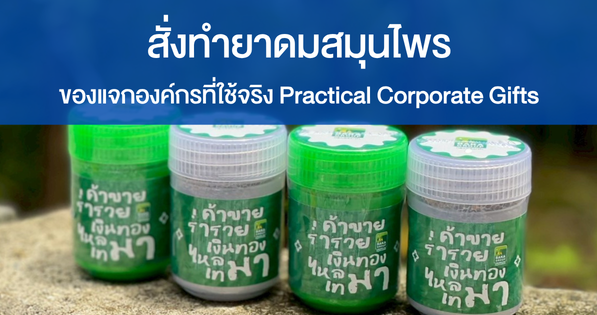
สั่งทำยาดมสมุนไพร is a practical choice for corporate giveaways and seminar gifts because it is compact, easy to carry, and useful beyond the event. Buyers can choose a traditional dry-herb inhaler or a liquid borneol-style inhaler, add event or company artwork, and create a gift with an OTOP community-enterprise story rather than another disposable souvenir.
Why do corporate teams choose custom herbal inhalers?
A good giveaway should be relevant to the event, easy for staff to distribute, and worthwhile for the recipient to keep. Herbal inhalers meet those conditions without taking much space in a welcome bag, registration pack, or desk drawer. Their small format also makes quantity counting, branch allocation, and transport easier than many bulky gifts.
The product works especially well when the brief asks for a Thai wellness theme. It can connect a modern company identity with familiar local herbal craftsmanship. For recipients, the value is simple: they receive an item intended for personal everyday use, not a decorative object that depends on taste or available storage space.
Typical uses include:
- seminar registration gifts and conference welcome kits;
- employee appreciation, internal wellness, or town-hall events;
- customer thank-you gifts and year-end campaigns;
- trade-show giveaways and new-product launches;
- hotel, spa, café, gallery, and tourism collaborations;
- CSR projects that include responsible community sourcing.
สั่งทำยาดมสมุนไพรแบบไหนเหมาะกับงานของเรา?
There are two practical directions. Neither is automatically better; the right choice depends on the intended experience, packaging, scent direction, and budget.
Traditional dry-herb inhaler
This format communicates Thai herbal identity clearly. The visible or enclosed herbal components can support a natural, craft-focused story, depending on the selected container. It suits wellness programs, Thai-themed events, tourism businesses, and buyers who want a recognizably traditional product presented with contemporary branding.
Ask the producer about the container, internal components, scent profile, label area, and packing method. A sample should be reviewed as a complete unit because aroma, airflow, fit, and visual presentation work together.
Liquid borneol-style inhaler
A liquid borneol-style format can offer a different tactile and aromatic experience and may allow fabric wrapping or other presentation details, depending on the chosen model. It is suitable for ceremonies, premium gift sets, creative events, and brands that want color or textile to play a stronger role in the design.
Confirm how recipients use the product, how the container is sealed, and how it will be protected during delivery. The artwork should explain the product clearly rather than relying on appearance alone.
How should a buyer compare the two?
Request samples or scent testers before approving a large order. Review each option using the same checklist:
- first scent impression and how it develops after opening;
- ease of use for the intended age group;
- container size, closure, and portability;
- printable or sticker area for the brand;
- individual packing and distribution speed;
- budget per unit and total delivered cost;
- suitability for the event theme and recipient profile.
The goal is not to choose the strongest scent. It is to choose a balanced product that fits the audience and represents the organization appropriately.
Who produces the products?
Mor Boonruang Thai Traditional Medicine Local Herbal Community Enterprise produces handmade community products and develops the work through its second generation. The new generation continues the local herbal foundation while adapting product presentation, design coordination, and order planning for modern organizations.
Can handmade production support a corporate-volume order?
Yes, handmade production can support substantial orders when the project is planned as a controlled workflow. “Handmade” should describe human skill and community participation, not inconsistent specifications. Capacity depends on the product, customization, packaging, current production schedule, and delivery destinations, so the producer must confirm feasibility for every project.
Use these production checkpoints:
- Brief confirmation: agree on product type, scent, quantity, artwork, packing, delivery date, and destinations.
- Sample or tester review: compare the physical product and aroma before final approval.
- Artwork proof: check spelling, logo proportions, colors, QR code, required text, and print size.
- Procurement approval: confirm quotation, payment terms, billing details, and authorized approvers.
- Material preparation: reserve containers, aromatic components, labels, and packing materials.
- Staged production: assemble and pack in manageable batches with counting controls.
- Quality checks: inspect appearance, closure, label position, readable text, and agreed packing.
- Final allocation: separate quantities by event, branch, department, or shipping address.
- Delivery and acceptance: count cartons or bundles and record discrepancies promptly.
What information is needed to request an accurate quotation?
Prepare the following details:
- required quantity and possible reserve quantity;
- event type and recipient profile;
- preferred dry-herb or liquid borneol-style format;
- scent direction or tester options to review;
- logo file and brand-color references;
- text, event date, campaign name, or QR destination;
- individual packing, set assembly, or plastic wrapping requirements;
- delivery address or allocation by multiple destinations;
- the date products must arrive, not only the event date;
- billing, vendor-registration, and document requirements;
- evidence or production information required for a CSR report.
For design exploration, start with the DIY configurator. Organizations needing product selection, customization, and manufacturing support can review OEM services, then send the completed brief through contact.
How many pieces should a seminar or corporate event order?
Start with confirmed attendees, then add operational needs. A practical planning formula is:
attendee quantity + speakers and staff + display samples + replacements + post-event reserve = order quantity
For example, do not assume an attendance registration number equals the final production quantity. The organizer may need pieces for moderators, sponsors, media, internal reviewers, late registrations, or a second venue. If the campaign serves several branches, create an allocation table before production and state whether each branch needs separate labels or packing slips.
How can the label make the gift useful after the event?
A label should help people identify the product and remember the giver without overwhelming a small container. Prioritize information in this order:
- product name or scent;
- company, campaign, or event identity;
- concise use or handling information where appropriate;
- QR code or short contact path;
- required product and producer information.
Use a QR code only when it leads somewhere useful, such as event resources, a feedback form, a campaign page, membership registration, or the company’s verified contact channel. Test the final printed size with more than one phone. A QR code that works on a large screen may fail after reduction or when placed on a curved surface.
How do we prevent recipients from discarding the giveaway?
A practical checklist:
- choose a scent direction suitable for the recipient group;
- approve a physical sample, not only a mock-up;
- keep the logo visible but not overpowering;
- make the product name readable;
- avoid excessive outer packaging;
- distribute it at a meaningful moment, such as registration or a wellness session;
- have staff explain the community story in one accurate sentence;
- provide a QR destination with genuine post-event value.
Procurement and quality checklist before approval
Before issuing the purchase order, confirm:
- exact approved sample or specification reference;
- product format, scent, container, and quantity;
- artwork version number and language accuracy;
- logo ownership and permission to print supplied assets;
- packing unit and units per carton or bundle;
- allocation list and complete destination contacts;
- production, proof-approval, and delivery milestones;
- acceptance method for quantity or visible defects;
- invoice, tax, vendor, and procurement documentation;
- permission rules for production photos or community stories;
- a contact person authorized to approve changes.
A simple ordering journey from idea to delivery
Step 1: Define the purpose
State whether the inhalers are for seminar attendees, customers, employees, a campaign, or CSR communication. Describe the recipient and distribution environment.
Step 2: Select the product and scent direction
Compare dry-herb and liquid borneol-style options. Purchase testers or request applicable samples before choosing an aroma for a large audience.
Step 3: Build the design brief
Send a usable logo file, text, colors, QR link, quantity, packing, and must-arrive date. Keep the small label readable.
Step 4: Approve proof and commercial terms
Check every word and scan the QR code. Confirm quotation, payment, documents, and change limits before materials are committed.
Step 5: Produce, check, and allocate
The community team prepares the handmade order through controlled stages. The buyer confirms branch or event allocation before final packing.
Step 6: Receive and use the project evidence
Count the shipment promptly. Retain approved, shareable documentation for procurement closure and accurate CSR or campaign reporting.
Why this gift connects usefulness with Thai community value
Before distribution, brief event staff on what the product is, who made it, and where the QR code leads. Keep the explanation factual and short. If the organization plans a social-media post, agree in advance which production images may be shared and how the community enterprise should be named. After the event, record remaining stock and recipient feedback. These operational steps help the buyer improve the next order, avoid excess quantities, and preserve a respectful relationship with the producer.
For สั่งทำยาดมสมุนไพร, dry-herb inhalers, or liquid borneol-style inhalers for corporate giveaways and seminars, contact LINE: @boonrueng. Send the quantity, event, preferred format, artwork status, packing, destinations, and must-arrive date to receive a more useful consultation.
Frequently asked questions
- Which custom inhaler format is suitable for a corporate seminar?
- Choose a traditional dry-herb inhaler for a clear Thai herbal identity, or a liquid borneol-style inhaler when the project needs a different sensory or textile-led presentation. Review a physical sample, scent, container, label area, packing, and total delivered cost before approving the order.
- What information should I send to request a custom herbal inhaler quotation?
- Send the quantity, event and recipient profile, preferred product and scent direction, artwork or logo, packing, destinations, must-arrive date, procurement documents, and any CSR evidence requirements. A complete brief produces a more useful quotation than quantity alone.
- Can a handmade OTOP community enterprise support a large corporate order?
- It can when capacity is confirmed for the specific product, customization, packaging, schedule, and destinations. Large handmade orders should use staged production, counting controls, quality checkpoints, written approvals, and a final allocation plan.